

A size guide that helps shoppers choose with confidence
A size chart should answer a buying question, not simply occupy space below a product. Explain what was measured, how the garment should fit and how shoppers can compare it with something they already own.
By LeBrands.Store editorial team
Key takeaways
- Distinguish body measurements from finished garment measurements.
- Use the same size names in your guide and product options.
- Turn repeated fit questions into specific, verified product information.
State exactly what your measurements describe
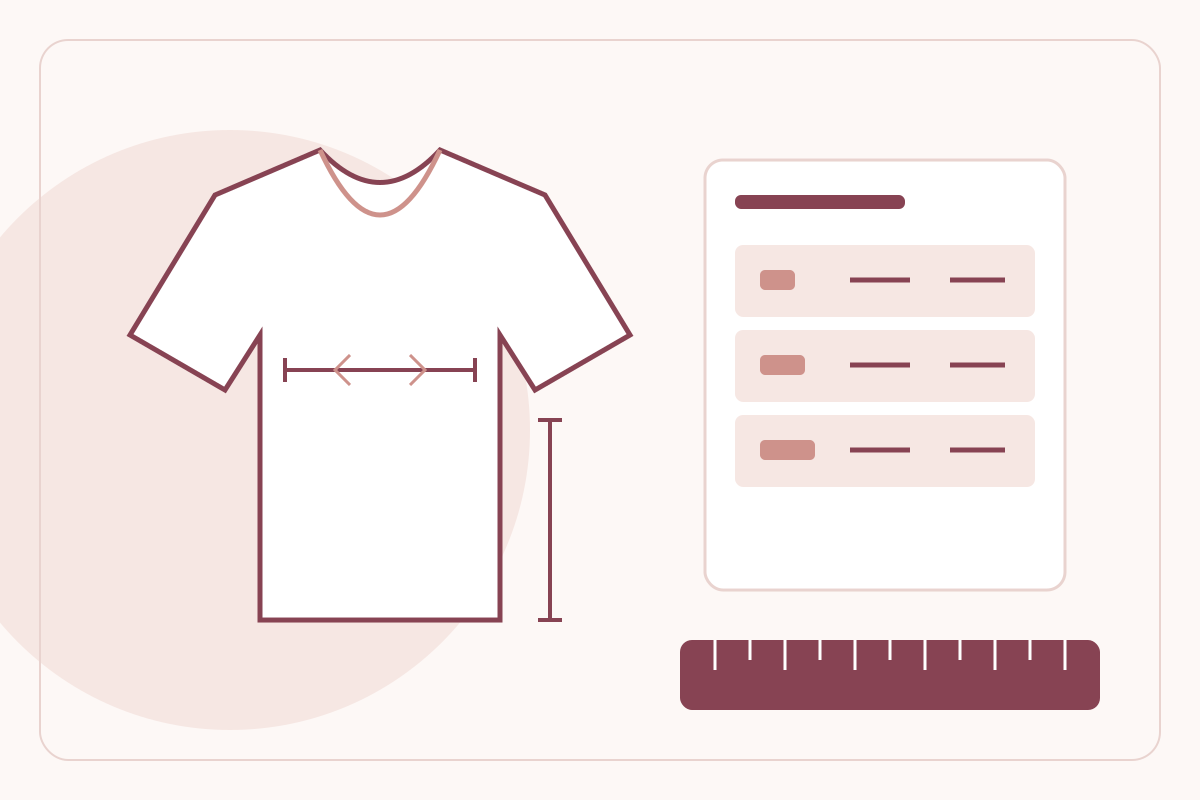
Start by deciding whether your chart describes a person's body or a finished garment. A chest measurement taken across a flat shirt is not the same as a body circumference. Label the method, unit and measurement points. If you publish both centimetres and inches, check the conversion and rounding before sharing the chart.
Measure actual samples from the relevant style rather than reusing a chart from an unrelated collection. Two garments carrying the same size label can have different shapes, fabrics and intended fits. Record a tolerance only if your production team can support it; an unexplained range can create more uncertainty than it resolves.
Add the context a number cannot provide
Describe the intended fit in plain language: close to the body, regular through the shoulders or deliberately oversized. Explain whether the fabric stretches and whether the item has an adjustable waistband or fastening. Avoid claiming universal comfort or recommending that everyone choose one size larger without evidence from the product.
Model measurements can help when the photographed sample size is known and accurately stated. Pair those facts with a practical comparison: measure a similar garment that already fits well. Product-specific guidance is more useful than a generic promise that the item is true to size.
Keep size information beside the decision
Place a short size-guide link or section close to the size selector. Keep the labels identical across the chart, variant options and order records. A buyer should not need to translate between numerical sizes on the product and letter sizes in a separate document.
Make the chart readable on a phone without shrinking every column into tiny text. Prioritise the measurements that affect fit for that garment. Use a clear table or a compact list, and explain how to measure before presenting a long set of numbers.
Improve the guide using real support questions
Keep a simple log of fit-related enquiries and returned-item feedback. Separate a measurement problem from a preference problem, a packing mistake or a defect. Those are different causes and need different responses. Update the guide when you have verified new measurements, not after every isolated complaint.
After changing a guide, check the product page, image captions and support responses for consistency. Preserve the facts associated with earlier orders when handling a dispute. A clearer guide can support a better decision, but it does not remove consumer rights or guarantee that returns will fall.
Frequently asked questions
Can I use one size chart for every product?
Only when the measurement basis and fit genuinely apply to all those products. Different cuts or fabrics may need their own guide.
Should the chart show body or garment measurements?
Either can be useful. State which one you use, define the units and show shoppers how to take a comparable measurement.
Keep reading
How to build D2C product pages that answer buyers' questions
Structure product titles, images, variants, descriptions and delivery information so Indian D2C shoppers can make an informed purchase.
Read the guide
Inside the LeBrands.Store catalogue: products, variants and media
Learn how LeBrands.Store separates product classification, variant options, SKU stock, product media and private cost information.
Read the guide